
By Ishola Halimah Bisola
Nigeria’s education sector is once again facing a troubling development as renewed tensions between university lecturers and authorities, coupled with the resignation of more than 200 academic staff at Kaduna State University, raise fresh concerns about the future of tertiary education in the country.
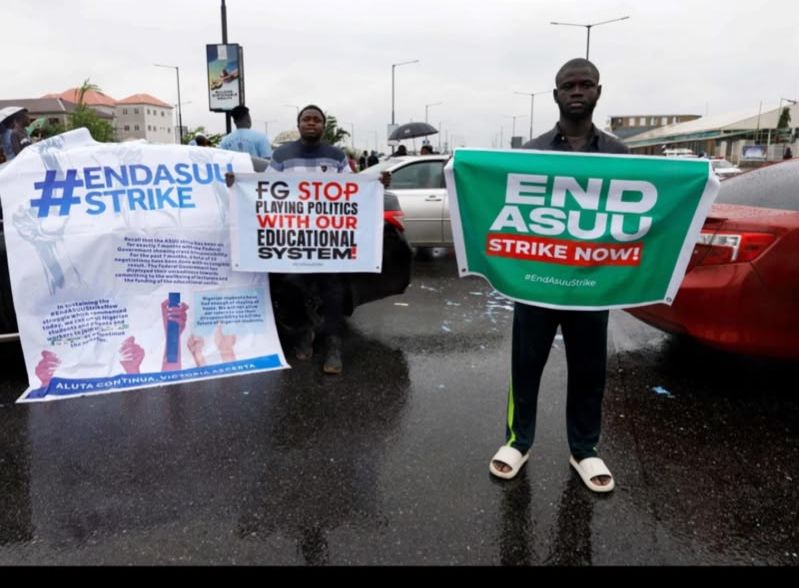
For years, the Academic Staff Union of Universities, ASUU, has been engaged in disputes with the Federal Government and university authorities over poor funding, inadequate infrastructure, lecturers’ welfare, earned allowances, university autonomy and the implementation of agreements reached between the union and government.
The latest development at Kaduna State University, KASU, has brought these longstanding challenges into sharper focus. On Monday, August 17, 2026, ASUU-KASU raised the alarm over the departure of more than 200 academic staff, including professors and other experienced lecturers.
The union attributed the mass resignation largely to poor conditions of service and the alleged failure to implement the 2025 Federal Government-ASUU agreement at the institution.
The development goes beyond a disagreement between lecturers and university management. It raises a broader question about the ability of Nigeria’s public universities to attract and retain qualified academics in an increasingly competitive environment.
A Crisis That Has Been Building for Years
The problems confronting Nigeria’s university system are not new. For decades, ASUU has embarked on industrial actions over issues including university funding, lecturers’ welfare, revitalisation of infrastructure, payment of earned allowances and the implementation of agreements reached with government.
One of the most notable examples was the 2022 ASUU strike, which lasted for several months and disrupted academic activities across public universities.
The prolonged strike delayed examinations and graduations and forced thousands of students to remain at home for months. While industrial action is often criticised because of its impact on students, it is also important to consider the underlying issues that lead to such disputes.
When lecturers repeatedly resort to strikes to demand improved conditions, it suggests that existing negotiation and implementation mechanisms have failed to provide lasting solutions.
The Federal Government has repeatedly acknowledged the importance of dialogue in resolving disputes with ASUU. In October 2025, the government urged the union to reconsider industrial action and maintained that dialogue remained the best approach to resolving outstanding issues in the tertiary education sector.
The challenge, therefore, is not simply how to resolve the current disagreement. The bigger question is how Nigeria can prevent the same cycle of demands, negotiations, agreements, delays and strikes from recurring every few years.
The KASU Warning
The situation at Kaduna State University provides a disturbing example of what can happen when dissatisfaction among academic staff is allowed to persist.
According to the ASUU-KASU Chairman, Dr Abubakar Abdullahi, more than 200 professors and other academic staff have left the institution.
The union said the departures were connected to poor conditions of service and the alleged non-implementation of the 2025 Federal Government-ASUU agreement, which took effect in January 2026.
ASUU-KASU has subsequently issued a two-week ultimatum to the university authorities and relevant stakeholders to address the outstanding issues. The union warned that failure to take satisfactory action could result in a total and indefinite strike at the institution.
This development should concern not only the university management and Kaduna State Government but everyone who understands the importance of education to national development.
A university may have classrooms, laboratories and libraries, but without qualified and experienced lecturers, those facilities cannot achieve their intended purpose.
The departure of more than 200 academic staff is therefore not merely a matter of numbers. Behind those figures are professors, researchers, senior lecturers and other academics who have spent years teaching students, conducting research, supervising projects and building the academic reputation of the institution.
Replacing such a pool of experienced academics cannot happen overnight.
The Growing Problem of Academic Brain Drain
Nigeria has experienced a significant movement of professionals abroad in search of better opportunities, a trend popularly described as the “Japa” phenomenon.
The university system is also increasingly affected by this problem, with lecturers moving between institutions or leaving the country altogether in search of better remuneration, working conditions, career opportunities and research environments.
Reports surrounding the KASU situation indicate that some of the lecturers who resigned have secured appointments in newer universities within and outside Kaduna State.
This raises serious concerns about academic brain drain.
When an experienced professor leaves a university, the institution loses more than an employee. It loses years of experience, research knowledge, institutional memory and mentorship.
Students may also lose access to academics who have developed specialised expertise in their fields over decades.
The consequences can affect teaching, research output, postgraduate supervision and ultimately the reputation of the institution.
For this reason, the KASU situation should not be treated as an isolated employment dispute. It should form part of the larger national conversation about the sustainability of Nigeria’s education system.
Students Remain the Biggest Victims
Lecturers are expected to teach, conduct research, supervise students, publish academic works and contribute to national development.
However, when their remuneration, working environment and other conditions of service are considered inadequate, dissatisfaction can grow.
If negotiations produce agreements but implementation is delayed, frustration becomes even greater.
At KASU, ASUU says the 2025 agreement has not been implemented despite taking effect in January 2026. The union has also warned that continued delays could result in the accumulation of salary arrears.
This creates a recurring cycle.
Lecturers demand better conditions. Government or university authorities negotiate with them. Agreements are reached. Implementation is delayed. Frustration increases. Eventually, another industrial dispute emerges.
The students then become the biggest victims.
Whenever ASUU embarks on a strike, attention often focuses on the lecturers and the government. But students bear much of the immediate and long-term consequences.
A prolonged strike can delay graduation, professional examinations, employment opportunities and postgraduate studies.
Students who should complete four-year programmes within four years may spend significantly longer in the university.
The uncertainty also affects parents who continue to provide accommodation, feeding and other expenses while their children remain at home.
For young Nigerians already facing unemployment and economic hardship, repeated academic disruptions can be particularly discouraging.
It can also create the perception that attending a Nigerian public university automatically means spending additional years in school because of strikes and administrative crises.
Why Lecturer Retention Matters
If more than 200 academic staff can leave an institution because of concerns over welfare and working conditions, then the issue goes beyond individual lecturers.
It suggests that the institution may be struggling to retain the human resources required to sustain quality education.
The ASUU-KASU leadership has warned that losing experienced academic staff could take years for the university to recover from.
That warning deserves serious attention.
Universities are built over many years. Their reputation depends on the quality of their lecturers, research output, academic programmes and graduates.
When experienced academics leave in large numbers, the effects may not immediately appear in examination results, but they can gradually weaken the institution.
This is why lecturer retention must become a priority.
Nigeria cannot continue to address problems in the education sector only when lecturers threaten industrial action.
There must be a long-term framework for funding universities, improving working conditions and implementing agreements reached with academic unions.
Government Must Move Beyond Agreements
Government should ensure that agreements reached with academic unions are realistic, properly funded and accompanied by clear timelines for implementation.
Where government cannot fulfil a particular commitment immediately, it should communicate honestly with university workers and explain the challenges rather than allow uncertainty and frustration to persist.
University managements also have a responsibility.
They must maintain transparent communication with academic staff, address legitimate welfare concerns and establish effective channels through which problems can be resolved before they develop into major crises.
ASUU, on its part, must continue to recognise the devastating consequences prolonged strikes have on students and the wider education system.
Industrial action may be a legitimate means of demanding better working conditions, but it should remain a last resort after meaningful negotiation and engagement have been exhausted.
The ultimate goal should be a university system where lecturers can teach without constantly threatening strikes and where students can pursue their education without fearing sudden disruption.
Nigeria Needs Sustainable Investment in Education
Nigeria’s education sector requires sustained investment rather than temporary interventions whenever a crisis emerges.
A country cannot claim to be preparing for the future while allowing its universities to lose experienced lecturers because of unresolved welfare and funding problems.
Education is directly connected to economic growth, innovation, employment and national development.
Universities produce the doctors, engineers, lawyers, teachers, researchers, journalists, scientists and administrators who contribute to society.
Therefore, investing in lecturers and universities is also an investment in Nigeria’s future.
The Kaduna State University crisis is a reminder that the consequences of neglecting education can eventually become much more expensive than addressing the problems in the first place.
A National Warning
The resignation of more than 200 lecturers from Kaduna State University is a troubling development in Nigeria’s already challenged education sector.
It comes against the background of years of ASUU-government disputes, repeated strikes and unresolved questions surrounding university funding, staff welfare and the implementation of agreements.
The KASU crisis should not simply become another headline that disappears after a few days.
It should provoke a national conversation about the kind of university system Nigeria wants to build.
If experienced lecturers continue to leave, agreements remain unimplemented and strikes continue to interrupt academic activities, the country risks weakening the very institutions responsible for producing its future workforce.
The time has come for government, university authorities and ASUU to move beyond the familiar cycle of demands, negotiations, promises, delays and strikes.
Nigeria’s students deserve stability.
Lecturers deserve decent working conditions.
Universities deserve adequate funding and effective management.
Most importantly, Nigeria deserves an education system that does not have to shut down before its problems are taken seriously.
The situation at Kaduna State University is therefore not merely a Kaduna problem. It is a national warning.
If Nigeria fails to address these challenges now, the cost of rebuilding its universities and restoring lost academic capacity later may be far greater.