
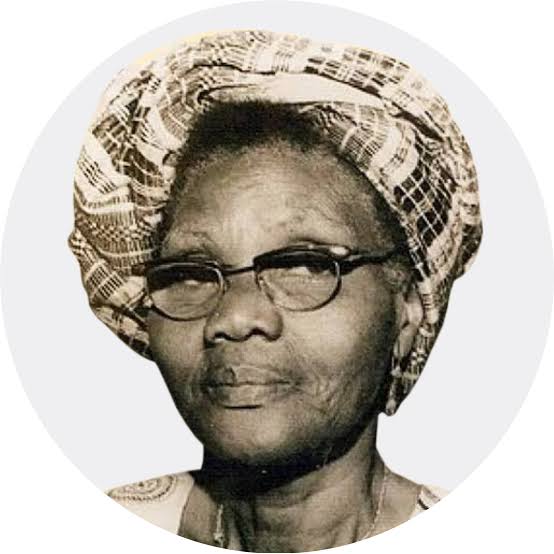
By Musemil Abubakar
The Mother of Africa: Funmilayo Ransome-Kuti:
Nigeria’s history isn’t just about kings, empires, and colonial rulers—it’s also about fierce, passionate heroes. One of the greatest of these is Funmilayo Ransome-Kuti (1900–1978), a woman whose activism, long before independence, laid the groundwork for the rights of women and the nation’s freedom. She wasn’t just a political figure; she was a pioneering educator and the matriarch of one of Nigeria’s most famous families.
Early Life and the Power of Education:
Born Frances Abigail Olufunmilayo Thomas in Abeokuta, she was one of the first girls to attend the Abeokuta Grammar School and later studied in England. Upon returning to Nigeria, she became a teacher, believing deeply that education was the key to empowerment. She married the Reverend Israel Oludotun Ransome-Kuti, a prominent educator and unionist. Their children would go on to become cultural and political icons, including the world-famous musician and activist, Fela Kuti.
The Battle for Women’s Rights:
Funmilayo Ransome-Kuti’s major historical impact began in the 1940s in Abeokuta, the capital of the Egbaland region. She co-founded the Abeokuta Women’s Union (AWU), which rapidly grew from an organization of educated elite women into a mass movement of market women, who were the backbone of the local economy.
Her most famous campaign was the 1947–1949 protest against the unfair and heavy taxation of women by the local traditional ruler, the Alake of Abeokuta. Market women faced steep taxes, which Ransome-Kuti argued were unjust, especially since women could not vote or hold political office.
She organized thousands of women, who engaged in powerful, non-violent, yet extremely determined mass protests. The women not only petitioned the authorities but also demonstrated, singing, chanting, and even temporarily occupying the Alake’s palace. Their sustained, coordinated action was so effective that it eventually forced the Alake to temporarily step down and the colonial administration to repeal the unfair tax laws. It was a massive victory and a landmark moment for women’s political power in Nigeria.
Championing Independence and Global Solidarity:
As the anti-colonial movement grew, Ransome-Kuti became one of its most outspoken leaders. She traveled internationally, making connections with other independence leaders and earning the nickname ‘The Mother of Africa’. She was a delegate to several constitutional conferences in London, where she tirelessly argued for Nigeria’s self-rule and universal suffrage (the right to vote) for all men and women.
She was famously unafraid to challenge both the British colonial authorities and the Nigerian men who dominated the emerging political scene. She was even briefly jailed for her protests, a badge of honor she wore proudly.
A Legacy That Lives On:
Funmilayo Ransome-Kuti passed away in 1978, suffering complications after a military raid on her son Fela Kuti’s communal home. Her life was a powerful testament to courage, justice, and the fight against oppression in all its forms.
She is remembered today not just as a prominent nationalist but as the woman who successfully mobilized and empowered ordinary Nigerian women to demand their rights. Her story is a key reminder that the fight for freedom and equality in Nigeria was led by powerful women decades before the nation itself was born.