
By Oluwatobi Omotosho
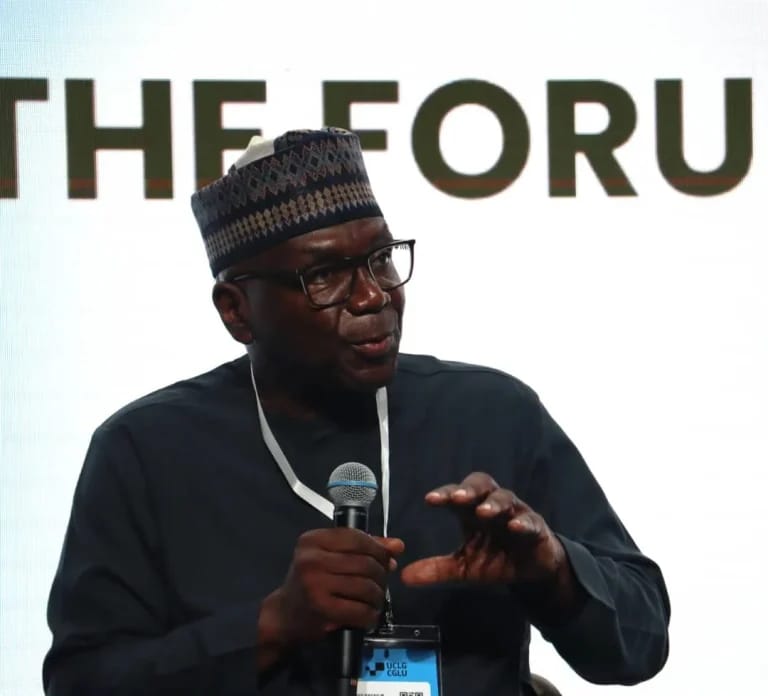
Kwara State Governor and Chairman of the Nigeria Governors’ Forum, AbdulRahman AbdulRazaq, has been elected President of the Forum of African Regions (FORAF).
AbdulRazaq’s election took place on Monday in Tangier, Morocco, on the sidelines of the United Cities and Local Governments (UCLG) World Congress.
According to a statement issued on Wednesday by the Deputy Chief Press Secretary, Government House, Ilorin, Mashood Agboola, the new leadership will focus on promoting decentralisation, regional cooperation and socioeconomic development across the African continent.
The statement noted that the forum seeks to strengthen the role of subnational governments in driving continental integration and sustainable development.
“The mandate of the Forum of Governors Regions/States of Africa is to accelerate socioeconomic development, deepen decentralisation and devolution, and position subnational governments as key drivers of continental integration and sustainable development,” the statement said.
AbdulRazaq will serve alongside four newly elected vice presidents representing different regions of Africa.
They include Ousmanou Oumarou of the Association of Regions of Cameroon for Central Africa, Mbarka Bouaida of the Association of Regions of Morocco for North Africa, Peter Anyang’ Nyong’o of Kisumu County, Kenya, for East Africa, and Panyaza Lesufi of Gauteng Province, South Africa, for Southern Africa.
The forum said the new leadership would work to strengthen decentralised cooperation and amplify the voice of African regions in continental development discussions.
Reacting to his election, AbdulRazaq called for stronger collaboration among African countries and regional governments to drive inclusive growth and development.
“It has often been observed that geography has constrained economic integration in parts of Africa. However, history has also shown that visionary leadership, strategic investment, and regional cooperation can overcome geographical barriers,” he said.
The governor stressed the importance of infrastructure and connectivity in overcoming developmental challenges and boosting economic integration.
“Around the world, nations have reduced the limitations imposed by geography through infrastructure, transport corridors, canals, and other forms of connectivity that link people, markets, and opportunities,” he said.
He added that Africa possesses the capacity to achieve similar progress through strategic partnerships and investment.
“By working together, investing in connectivity, and strengthening partnerships among our cities and regions, we can create sustainable linkages that support trade, innovation, environmental stewardship, and inclusive growth,” AbdulRazaq stated.
He urged African leaders to embrace a collective vision of integration and development.
“Tangier and Cape Town should not merely be seen as distant points on a map, but as anchors of a connected African future. This vision is achievable if we act collectively and embrace the spirit of cooperation that this Congress represents,” he said.
The Forum of African Regions is expected to use its new leadership structure to deepen collaboration among regional governments and promote policies aimed at advancing sustainable development, economic growth and continental integration.