
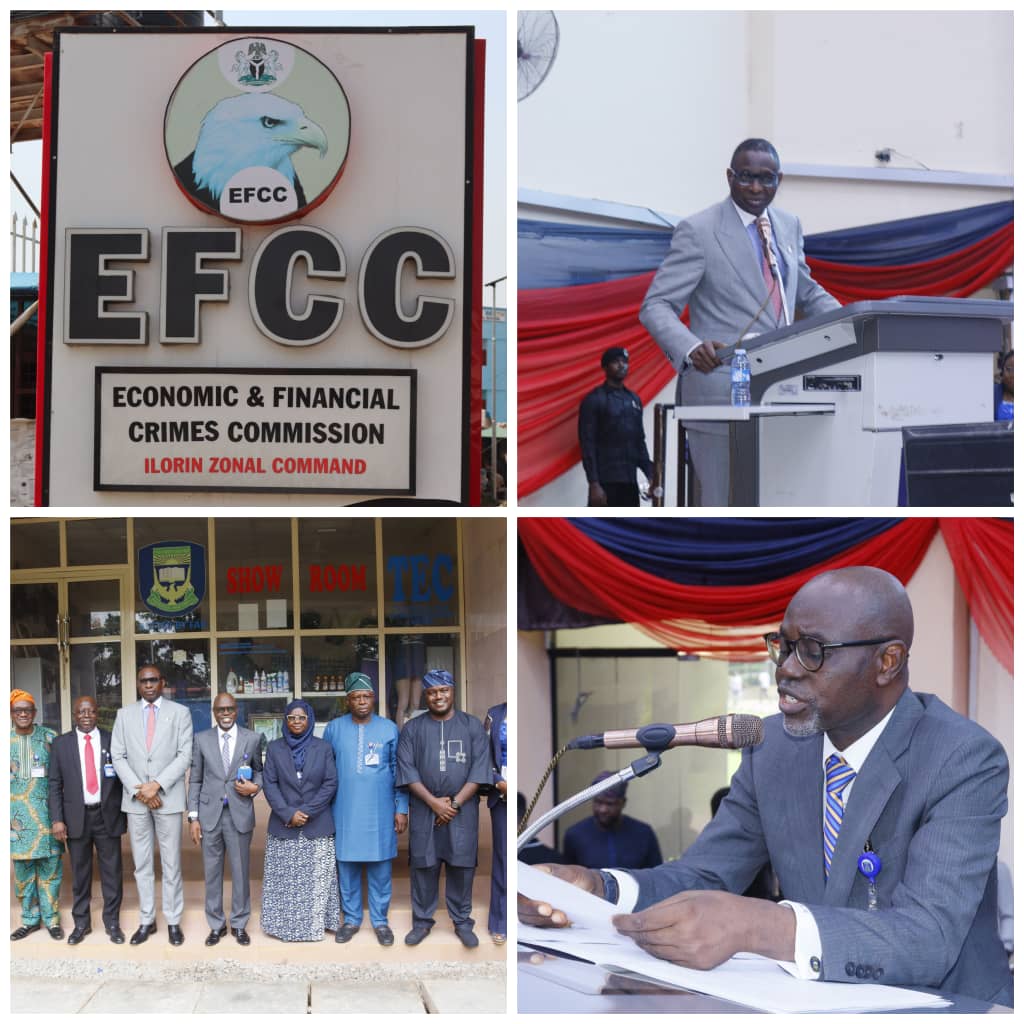
The Executive Chairman of the Economic and Financial Crimes Commission, EFCC, Ola Olukoyede, has called on critical stakeholders across Nigeria to work collaboratively towards ensuring peaceful, credible and transparent elections in 2027, warning that vote buying and other forms of financial inducement remain major threats to democratic governance.
Olukoyede made the call on Wednesday, June 10, 2026 while delivering the inaugural lecture of the High-Level Guest Speakers’ Series organised by the Centre for Peace and Strategic Studies, CPSS, University of Ilorin, themed “Mobilising Critical Stakeholders for Setting the Agenda for Peaceful and Credible 2027 Elections in Nigeria.”
The EFCC Chairman stressed that the Commission was firmly committed to combating the monetisation of the electoral process, describing vote buying, vote selling, and other forms of financial influence as practices that undermine democracy and good governance.
According to him, political leaders who secure office through financial inducement are more likely to focus on recovering their investments rather than serving the public interest.
He disclosed that the EFCC had recorded several arrests, prosecutions, and convictions of electoral offenders in recent years, including politicians, electoral officials, and citizens involved in vote-buying schemes. He assured Nigerians that the Commission would intensify efforts ahead of the 2027 general elections, stressing that vote buying remains a financial crime that would be prosecuted without fear or favour.
Olukoyede revealed that electoral corruption had become increasingly sophisticated, with perpetrators now deploying covert methods, coded communications, and off-site arrangements to influence voters. “We are aware of these antics and are prepared to safeguard the integrity of our elections,” he said, warning political actors against adopting what he described as a “cash-and-carry approach” to electoral victories.
The anti-graft czar identified stronger collaboration among stakeholders, enforcement of electoral laws, issue-based campaigns, media responsibility, impartial security operations, and effective conflict-resolution mechanisms as critical ingredients for credible elections. He urged political parties to build consensus around decency in campaigns and collectively reject vote buying, noting that inflammatory rhetoric and divisive politics had contributed to electoral violence in previous election cycles.
Olukoyede also challenged the media to play a more proactive role in exposing electoral corruption, particularly vote-buying networks, while urging security agencies to maintain professionalism and neutrality throughout the electoral process. He maintained that proactive and coordinated security arrangements would significantly reduce electoral risks and enhance public confidence in the democratic process.
Earlier, the Director of CPSS, G. A. Animasawun said the lecture series was conceived to provide a strategic platform for stakeholders to identify and address threats to Nigeria’s democratic process ahead of the 2027 elections. He noted that the Centre was determined to move beyond academic discourse by fostering practical solutions capable of strengthening electoral integrity, peace, and national security.
In his welcome address, the Vice-Chancellor of the University, Wahab Olasupo Egbewole, SAN, described electoral corruption as a major national security threat and called for stronger institutional collaboration to prevent electoral malpractice. He commended the EFCC under Olukoyede’s leadership for adopting a preventive approach to electoral corruption and proposed a strategic partnership between the Commission and the CPSS to deepen research, training and policy development on the nexus between electoral corruption and national security.
The event drew participants from the electoral management body, security agencies, civil society organisations, academia, the media, and other key stakeholders committed to strengthening Nigeria’s democratic institutions ahead of the 2027 general elections.