
By Favour Raphael
Two leading academics at Kwara State University (KWASU) have warned that Nigeria’s information space is facing a deepening crisis driven by artificial intelligence, bot networks, and widespread misinformation, describing it as a growing “post-truth” challenge to democracy and national stability.
The warnings were delivered on Wednesday, May 6, 2026, during the 2nd Faculty of ICT Lecture Series held at the KWASU Mini Convocation Arena.
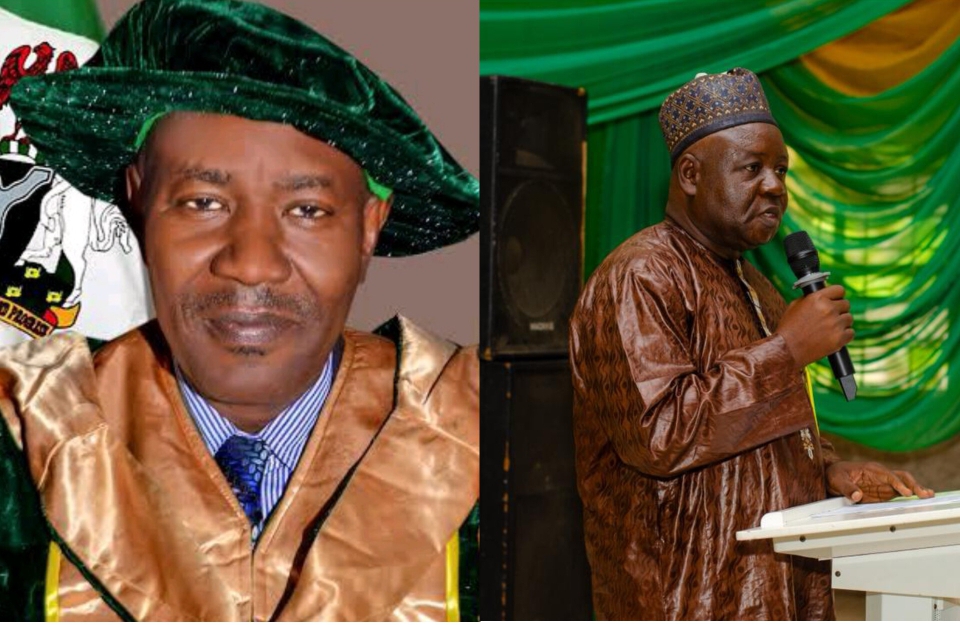
The Dean of the Faculty of Information and Communication Technology, Professor Isiaka Zubair Aliagan, said Nigeria’s media environment has become a “complex battlefield of narratives,” where fabricated news, deepfakes and bot-driven propaganda now compete directly with verified information.
He cautioned that platforms once seen as tools for democratic expression are now being used to amplify disinformation, including electoral manipulation, health-related falsehoods and divisive religious content.
Aliagan stressed that Nigeria, as Africa’s most populous democracy, is particularly vulnerable due to its large online population and rapid digital adoption, urging stronger academic and institutional responses to safeguard media credibility.
Delivering the keynote lecture, Professor Umaru A. Pate, a communication scholar and Fellow of the Nigerian Academy of Letters, warned that Nigeria is experiencing a “perfect storm” where Generative AI and automated bots are accelerating the spread of falsehoods faster than facts can be verified.
He described the “post-truth era” as one where emotional narratives and propaganda increasingly override empirical truth, weakening public trust in media institutions.
Pate cited research indicating that a majority of Nigerians frequently encounter fake news online, with social media identified as a major source of political disinformation. He also noted a growing “news avoidance” trend, as citizens increasingly disengage from traditional news due to perceived bias and misinformation.
Both scholars called for urgent reforms, including stronger media literacy, AI-driven fact-checking skills, ethical AI frameworks, and curriculum updates in journalism and communication studies.
They emphasized that restoring public trust will require collaboration between academia, media institutions, and policymakers.
Pate, however, maintained that the crisis is reversible, insisting that “reclaiming credibility requires collective responsibility, institutional resilience, and ethical leadership.”