
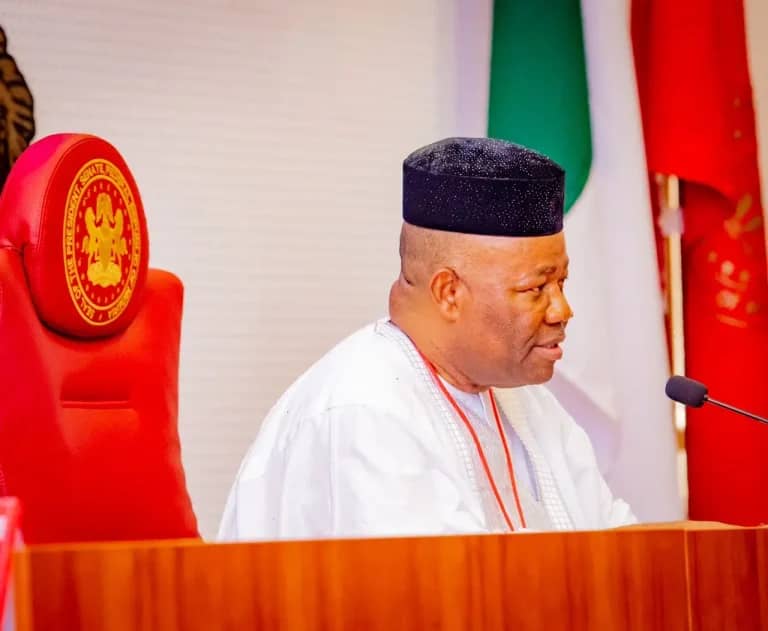
Nigeria’s long-running quest for state police has entered a new phase as the Senate passed a constitutional amendment bill seeking to decentralise policing and establish state-controlled police services across the country.
The landmark move now shifts the responsibility to the 36 state Houses of Assembly, where at least 24 legislatures must endorse the proposal before it can become law.
The Senate’s approval on Wednesday marked a major breakthrough in a debate that has dominated Nigeria’s security conversations for decades, coming amid rising cases of terrorism, kidnapping, banditry, communal clashes and organised crimes across the country.
The bill was passed after senators secured the required two-thirds majority through a manual voting process adopted following technical challenges with the electronic voting system in the chamber.
Under the proposed amendment, states would have the power to establish their own police services alongside the Nigeria Police Force, creating a dual policing structure in the country.
The framework provides that state police would be headed by Commissioners of Police appointed by state governors and confirmed by their respective Houses of Assembly, while the Inspector-General of Police would continue to oversee the Federal Police Service.
Presenting the bill, Senate Leader, Senator Opeyemi Bamidele, said the proposal was designed to balance local security needs with national unity.
He explained that state police would handle issues such as enforcement of state laws, crime prevention, public safety and protection of lives and property, while the federal police would retain responsibility for national matters including counter-terrorism, cybercrime, border security and interstate crimes.
The proposed amendment also includes safeguards aimed at preventing political abuse, following concerns that governors could use state police to intimidate opponents or suppress dissent.
The Senate inserted provisions preventing state police authorities from arresting, detaining or using force against individuals or groups simply for criticising government policies except as provided by law.
Lawmakers also proposed that the National Assembly should set minimum standards for recruitment, training, discipline, firearms control, accountability and professional conduct of state police officers.
Supporters of the reform argue that state police will improve intelligence gathering and security response because officers recruited locally would understand their communities better.
The Director-General of the Development Agenda for Western Nigeria Commission, Seye Oyeleye, described the development as a major step towards addressing Nigeria’s security challenges, though he noted that state police would not be a complete solution.
According to him, Nigeria’s current centralised policing structure is no longer sufficient for a country with a population of over 200 million people and diverse security challenges.
He said decentralising policing would bring security closer to communities and increase the country’s policing capacity.
Similarly, the Western Nigeria Security Network, Amotekun, said the South-West is prepared for the implementation of state police, describing the reform as a practical solution to insecurity.
The Chairman of Amotekun commanders in the region, Adetunji Adeleye, said the success of the security outfit showed that community-based policing could help identify and tackle crimes more effectively.
However, critics of state police have continued to raise concerns over possible misuse by political leaders, especially during elections.
The proposal has remained one of the most debated constitutional reforms since the return of democracy in 1999, with previous attempts stalled over fears of abuse and lack of safeguards.
With the Senate and House of Representatives now backing the amendment, the next major hurdle lies with state assemblies.
If 24 or more state legislatures approve the bill, it will be transmitted to President Bola Tinubu for assent, potentially paving the way for one of Nigeria’s biggest security reforms since independence.
The debate has now moved from Abuja to state capitals, where lawmakers hold the key to the future of state policing in Nigeria.