
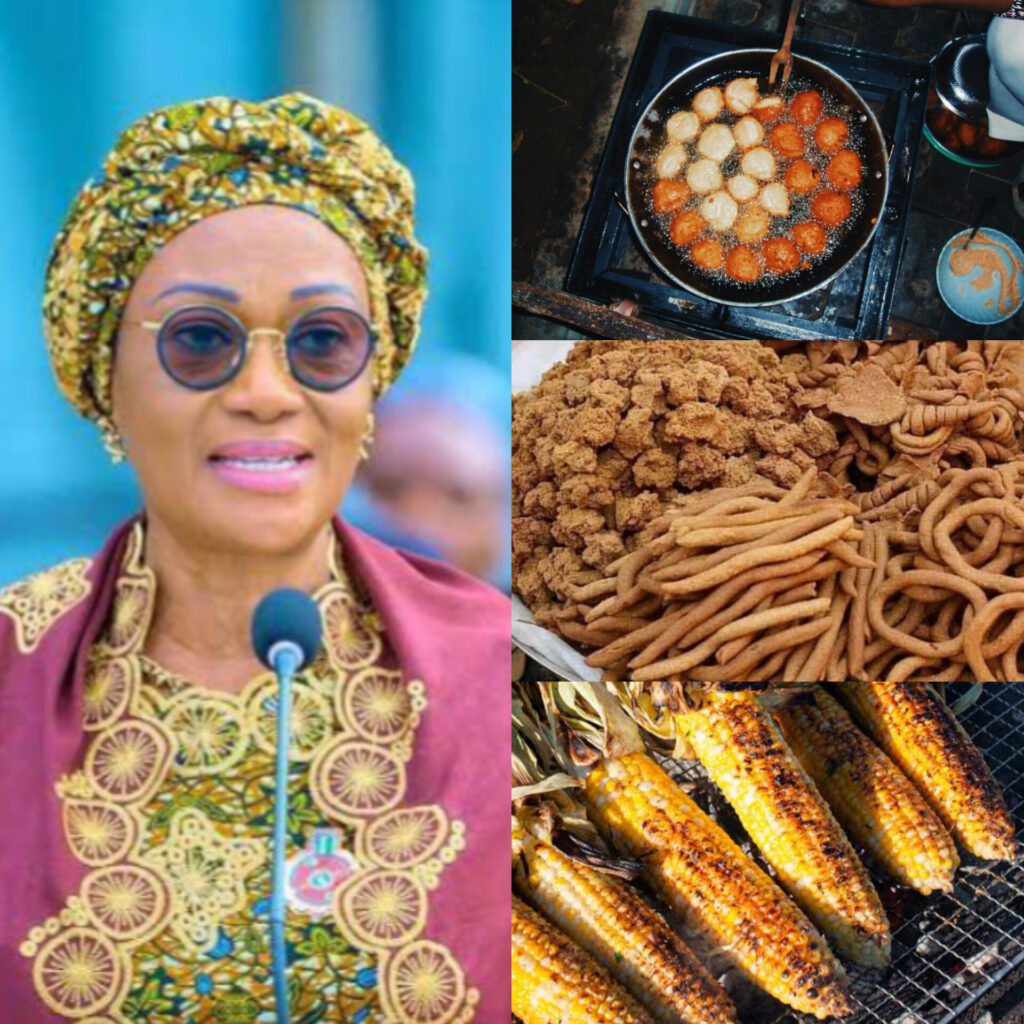
The recent comments by Nigeria’s First Lady, Senator Oluremi Tinubu, encouraging women to embrace small-scale businesses such as akara frying, kuli-kuli production, groundnut sales and other micro-enterprises were likely intended as words of encouragement. In a country battling economic hardship, resilience has become a necessary virtue, and many Nigerians have indeed survived difficult times through petty trading and informal businesses.
However, the reaction that followed her remarks reveals something deeper than mere criticism. It exposes a widening gulf between the lived realities of ordinary Nigerians and the perceptions of those in positions of power.
For millions of Nigerian women, selling akara is not an entrepreneurial dream. It is often a survival mechanism.
Across the country, mothers wake before dawn to prepare food for sale, not because they have discovered a thriving business opportunity, but because formal employment remains scarce and household incomes have been severely eroded by inflation, rising transportation costs, food insecurity and a weakening purchasing power.
The concern many Nigerians expressed was not about the dignity of labour. Nigerians have always respected hard work. The concern was about whether the nation’s leadership truly understands the scale of economic distress confronting citizens.
Recent data paints a sobering picture.
According to the World Bank, more than 60 percent of Nigerians were estimated to be living below the national poverty line in 2025, with the figure rising to about 63 percent, representing roughly 140 million people. The institution also estimated that an additional seven million Nigerians fell into poverty in 2025 alone despite signs of macroeconomic stabilization. (World Bank)
This is occurring even as government officials point to positive economic indicators.
Inflation has moderated from the record highs witnessed in 2024. The National Bureau of Statistics reported headline inflation at 15.15 percent by the end of 2025, while food inflation also showed signs of easing. (TheStar)
Yet therein lies the paradox of Nigeria’s economy.
Economic indicators may improve on paper while citizens continue to struggle in reality.
Lower inflation does not mean prices have become cheaper. It simply means prices are increasing at a slower pace. For families who have already seen the cost of rice, beans, cooking gas, transportation and rent rise dramatically over the past few years, the damage has already been done.
The World Bank notes that poor households spend up to 70 percent of their income on food. When food prices rise, the consequences are immediate and devastating. Parents skip meals. Children drop out of school. Families postpone healthcare. Small businesses collapse under shrinking consumer spending. (World Bank)
This explains why statements that appear disconnected from these realities generate strong reactions.
When a woman selling akara can no longer afford the beans she needs to make akara, the conversation is no longer about entrepreneurship. It is about survival.
When a graduate spends years searching for employment only to resort to roadside trading, the issue is no longer self-reliance. It is about the inability of the economy to create sufficient opportunities.
When citizens increasingly depend on informal work while facing rising living costs, they naturally expect leaders to acknowledge their struggles rather than appear to minimize them.
History teaches an important lesson about societies experiencing prolonged economic hardship.
People can endure suffering when they believe their leaders understand their pain and are genuinely working toward solutions. What often creates frustration is not merely poverty itself, but the perception that those making decisions are insulated from its effects.
That is why the national conversation triggered by the First Lady’s remarks is bigger than akara, kuli-kuli or petty trading.
It is about empathy.
It is about perception.
It is about whether public officials truly appreciate the daily realities of citizens navigating one of the most difficult economic periods in recent Nigerian history.
The challenge before government is therefore not simply to defend policies or cite economic statistics. It is to ensure that the benefits of economic reforms become visible in the lives of ordinary Nigerians.
Citizens want more than promises of future prosperity.
They want affordable food.
They want stable incomes.
They want jobs that match their education and skills.
They want security that allows farmers to return to their fields and businesses to flourish.
They want evidence that sacrifice today will produce a better tomorrow.
Until those expectations are met, Nigerians will continue to react strongly whenever public officials appear disconnected from the realities on the ground.
A child may cry softly at first.
But when ignored for too long, that child eventually screams.
Across Nigeria today, that scream is becoming impossible to ignore.