
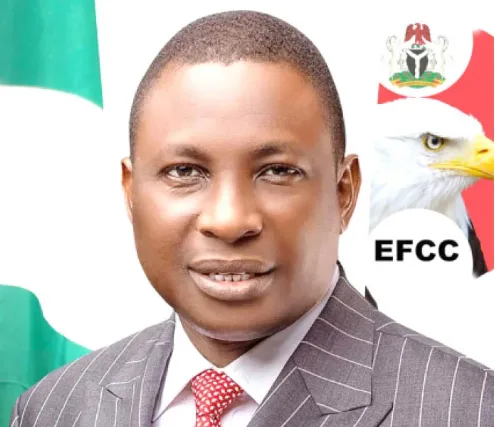
By Oluwatobi Omotosho
President Bola Tinubu’s directive to the Economic and Financial Crimes Commission, EFCC, to reverse its restriction on an Osun State Government account has sparked fresh political controversy ahead of the August 15 governorship election.
The EFCC had restricted withdrawals from the state’s statutory allocation account over an investigation into the alleged suspicious movement of about 11 billion naira in Ecology Funds, Intervention Funds and FAAC allocations.
However, President Tinubu, in a personally signed statement, directed the commission to return to court to vacate the order and discontinue the action, saying the timing of the restriction could create the impression that a federal agency was being used to influence the election.
The President said while anti-corruption agencies must remain independent, public confidence in the credibility and fairness of the electoral process must be protected.
The EFCC, however, maintained that its action was based on its statutory powers and was not politically motivated. The commission said it had detected suspicious transactions and restricted only one statutory account, insisting that its investigation into the state had been ongoing since March.
Meanwhile, the Osun State Government has taken the matter to court, seeking to nullify the restriction and demanding two billion naira in exemplary and aggravated damages from the EFCC.
The state government dismissed the EFCC’s explanation for the restriction, alleging that the action was politically motivated and intended to disrupt the payment of palliatives promised to workers. It also accused the commission of conducting a prolonged investigation without finding evidence against government officials.
The African Democratic Congress, ADC, welcomed the President’s intervention but questioned his reference to a court order authorising the EFCC’s action. The party’s National Publicity Secretary, Bolaji Abdullahi, argued that the commission had not publicly stated that it obtained such an order.
Former Vice President Atiku Abubakar also criticised the development, arguing that the President’s intervention raised questions about the operational independence of anti-corruption agencies.
Atiku maintained that restricting a state’s principal operational account shortly before an election could disrupt governance, delay payment of salaries and essential services, and create an atmosphere of political intimidation.
The controversy has also triggered calls on EFCC Chairman, Ola Olukoyede, to resign or be removed, with several Nigerians expressing anger over the commission’s handling of the matter on social media.
Reacting, constitutional lawyer Tokunbo Afikuyomi commended the President’s intervention but stressed that the EFCC must return to court to properly discharge the restriction rather than rely on executive action.
The President of the Nigerian Bar Association, Afam Osigwe, also faulted the reported restriction, warning that a blanket restriction on a state’s finances without due process could cripple governance.
Similarly, civil society groups said the controversy exposed the need for clearer legal boundaries between the powers of anti-corruption agencies and the constitutional autonomy of state governments.
The Osun State chapter of the All Progressives Congress, APC, has meanwhile called on Governor Ademola Adeleke to apologise to President Tinubu and the Minister of Marine and Blue Economy, Adegboyega Oyetola, over what it described as false accusations.
The party said the President’s intervention was based on concern over the timing of the EFCC’s action and did not amount to clearing the Osun State Government of the allegations being investigated.
The controversy comes just days before the August 15 Osun governorship election, with the EFCC insisting on its anti-corruption mandate, while the Osun Government and opposition parties continue to question the timing and political implications of the investigation.