
There are moments when tragedy reminds us that beneath our different flags, languages, and cultures, we are all simply human.
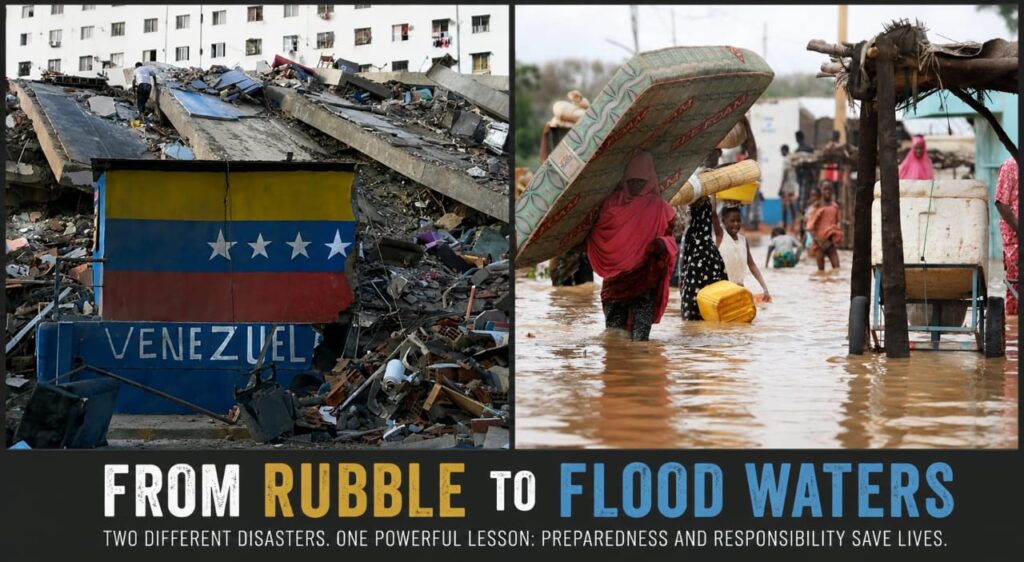
In recent weeks, the world stood still as Venezuela was rocked by devastating twin earthquakes. Homes crumbled within seconds, families were torn apart. Entire communities were reduced to piles of concrete and twisted steel.Yet, amid the devastation, hope refused to die.
According to reports by Channels Television and other international media, rescue workers pulled an 18-day-old baby alive from beneath the rubble after spending about 32 hours trapped inside a collapsed building. The infant’s mother was rescued shortly afterward, with medics believing she had shielded her baby during the collapse. It was a miracle that reminded the world that even in the darkest moments, hope can still be found beneath the rubble.
Meanwhile, other remarkable stories have also emerged. According to international reports, a 12-year-old girl survived 32 hours beneath the ruins of her apartment building by eating ketchup and grated cheese to stay conscious until rescuers reached her. Days later, rescuers also pulled a toddler alive from the wreckage, offering another glimmer of hope in a disaster that had claimed thousands of lives.
These stories are not just about survival, they are about a mother’s love,they are about the courage of rescue workers who refused to give up and they are about neighbours who dug through concrete with bare hands because every second meant the difference between life and death.
To the people of Venezuela, our thoughts and prayers are with you. May those who have lost loved ones find comfort. May those who survived find strength to rebuild. And may the memories of those who perished never be forgotten.
The world has witnessed similar tragedies before.The Philippines, Indonesia, and the United States are among the countries most prone to natural disasters, with risks including typhoons, earthquakes, floods, and volcanic activity.
These disasters remind us of one unavoidable truth that nature is powerful. Meanwhile, it teaches another lesson, preparedness saves lives.
Thankfully, Nigeria is not located along one of the world’s major earthquake fault lines. Every morning, we wake up without wondering whether the ground beneath our feet will suddenly split apart, at least for that, we should be grateful.
But while earthquakes may not define our reality, another disaster returns almost every rainy season and that is flooding. Every year, roads disappear beneath water, businesses are destroyed, farmers lose months of hard work, families abandon their homes and some never return.
The painful truth is that while earthquakes cannot be prevented, many flooding disasters in Nigeria can be reduced.
According to the National Emergency Management Agency (NEMA), blocked drainage channels, poor waste disposal, and encroachment on waterways remain major factors that worsen flooding in many Nigerian communities. The agency has repeatedly urged residents to stop dumping refuse into drains because doing so increases flood risks during heavy rainfall.
Perhaps this is where our lesson begins. How often do we finish drinking sachet water and casually throw the nylon into the gutter? How often do we toss plastic bottles, food packs and household waste into drainage channels without a second thought? We hardly notice these actions, until the rains come, then we wonder why the streets have become rivers.
Nature sends the rain,but sometimes, human negligence determines whether that rain becomes a disaster.This is not to say the government has no responsibility, far from it. The government has a critical role in protecting lives through sustainable drainage systems, proper urban planning and continuous maintenance of existing infrastructure.
Across Nigeria, there have been commendable efforts. Lagos State, for example, has continued investing in major storm-water drainage and channelisation projects, including the Carter Railway Channel project designed to reduce perennial flooding in parts of Ebute-Metta and surrounding communities. The state also carries out regular desilting of drainage channels before and during the rainy season to improve water flow.
These efforts deserve recognition because infrastructure saves lives.But even the best drainage system cannot function when it becomes a refuse dump.A drainage channel was designed for water.Not plastic bottles, not old tyres, not broken furniture, not household waste and many other dirt.
Even countries that frequently experience natural disasters have shown that preparation makes a difference.
Japan has invested heavily in earthquake-resistant buildings and sophisticated early-warning systems.The Netherlands, despite living below sea level in many places, has become a global example of flood management through an extensive network of dikes, pumping stations and carefully engineered drainage systems.
Bangladesh has significantly reduced cyclone deaths over the years through early-warning systems, evacuation shelters and community preparedness.
These countries cannot stop nature ,but they have learned to prepare for it, that is the lesson Venezuela offers us. Compassion should move us beyond sympathy. It should inspire action.As we pray for families searching through the rubble in Venezuela, let us also think about the gutters in our own neighbourhoods.The drainage beside our homes, the refuse we throw away and the water channels we ignore until they overflow. The government must continue investing in durable drainage infrastructure, enforcing environmental regulations and ensuring that waterways remain free from obstruction.
At the same time, every Nigerian must recognise that environmental responsibility begins with individual choices.Because a flood does not begin the day it rains.
Sometimes, it begins the day we throw a plastic bottle into a drainage channel.
As we mourn with Venezuela, let us also learn from her pain.For while earthquakes may begin beneath the earth…Many floods begin in our gutters.
And the choices we make today may determine whether tomorrow’s rainfall becomes a blessing or another breaking news story.