
There are moments when a nation breathes a collective sigh of relief.
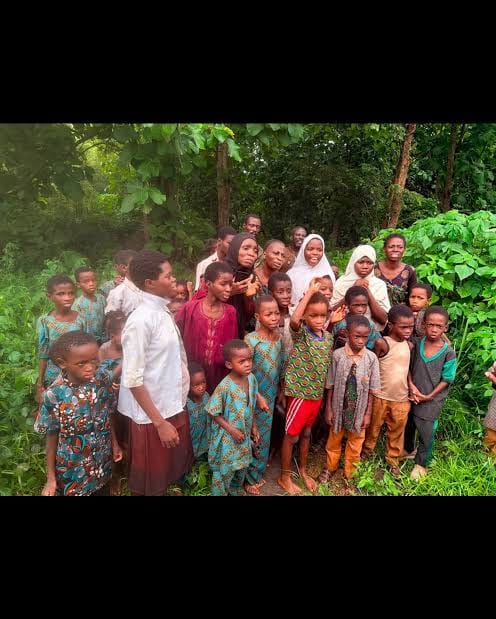
The rescue of the abducted pupils, teachers, and other victims in Oyo State is one of those moments. For days, families lived between hope and despair, wondering if the next phone call would bring good news or devastating heartbreak. Thankfully, this story ended with an embrace instead of a funeral.
For that, the Federal Government, our gallant Armed Forces, intelligence operatives, and every individual who contributed to the rescue deserve appreciation. Every life saved is precious, and every family reunited reminds us that there are still men and women who risk their own lives so others can return home.
But as the celebrations continue, perhaps we should pause for a moment and think beyond the photographs of smiling faces.
Because sometimes, people return home… but they never truly return the same. It is easy for the rest of us to move on after watching a two-minute news report. Life goes on. We switch channels. We scroll through our phones. Another headline replaces the last one.
For the rescued victims, however, the story does not end there.Imagine being a child, waking up in an unfamiliar place, surrounded by men carrying guns instead of school bags. Imagine hearing conversations about death when all you should be hearing are multiplication tables and playground laughter.
Imagine wondering whether you would ever see your parents again.No child should have memories like that.And then there are the parents.No mother deserves the pain of staring endlessly at her phone, praying it rings with good news. No father should know what it feels like to count every passing hour, unsure whether his child is still alive.Those days of waiting must have felt like years.
Even after reunion, many parents will probably continue checking on their children more often than before. Some children may become afraid of travelling. Others may wake up in the middle of the night after frightening dreams. Some may smile on the outside while silently carrying fears they cannot explain.These are wounds that cannot be treated with bandages.
Well, as joyful as this rescue is, our hearts must also remember those whose stories did not end with a reunion.
Among the victims was a man whose life was brutally cut short. Reports revealed that he was beheaded by the terrorists during the ordeal. While others were fortunate to return home, his family received the kind of news no family should ever receive.
One can only imagine the emptiness that now fills their home the chair that will remain vacant, the voice they will never hear again, the dreams that ended in the cruelest way imaginable.
As we celebrate those who survived, may we not forget to mourn those who did not.
Sadly, this is not the first time Nigerians have witnessed such painful scenes.
We remember the Chibok schoolgirls whose abduction shook not only Nigeria but the entire world.
Closer to home, we remember the innocent children abducted by bandits in Kaiama, Kwara State, and the fear that gripped families and communities as they waited desperately for their safe return. We also remember the heartbreaking attack on Borgu community, where innocent lives were lost, leaving families to mourn loved ones whose only “crime” was being in the wrong place at the wrong time.
Different communities. Different faces. Different names. Yet the same tears, the same unanswered questions, and the same longing for a Nigeria where no parent has to wonder whether their child will make it home safely, and no family has to bury a loved one because of mindless violence.
Each incident leaves behind frightened survivors, grieving families, and communities that may never feel completely safe again.Perhaps that is the greatest tragedy of all and sadly, we have become so accustomed to hearing about kidnappings that a successful rescue now feels like an extraordinary event.
Maybe the real victory should be reaching a day when children can travel for excursions without parents saying silent prayers every five minutes.A day when farmers can return from their farms before sunset simply because they are tired—not because they are afraid.A day when travelling from one town to another is just a journey, not an act of courage.That is the Nigeria every citizen longs for.
As we commend our security agencies for this successful operation, let this also renew our determination as a nation. Government must continue strengthening intelligence gathering, investing in modern security equipment, protecting schools and vulnerable communities, improving emergency response, and supporting security personnel who daily put themselves in harm’s way.Just as importantly, the rescued victims should not be left alone to heal.
They deserve trauma counselling, psychological support, medical care, and the reassurance that their nation still stands with them. Healing is not only about bringing people home; it is about helping them feel safe enough to live fully again.
In the end, the greatest lesson from Oyo is not merely that people were rescued.It is that behind every headline is a family.Behind every statistic is a name,behind every rescue is a child whose innocence has been shaken and behind every life lost is a family learning how to live with an absence that can never be replaced.
So today, let us celebrate those who came home.Let us honour those who made the rescue possible, let us remember the man who never returned.And above all, let us continue to pray and work for a Nigeria where rescue operations become rare, not because our security agencies are less capable, but because there are fewer people left to rescue.